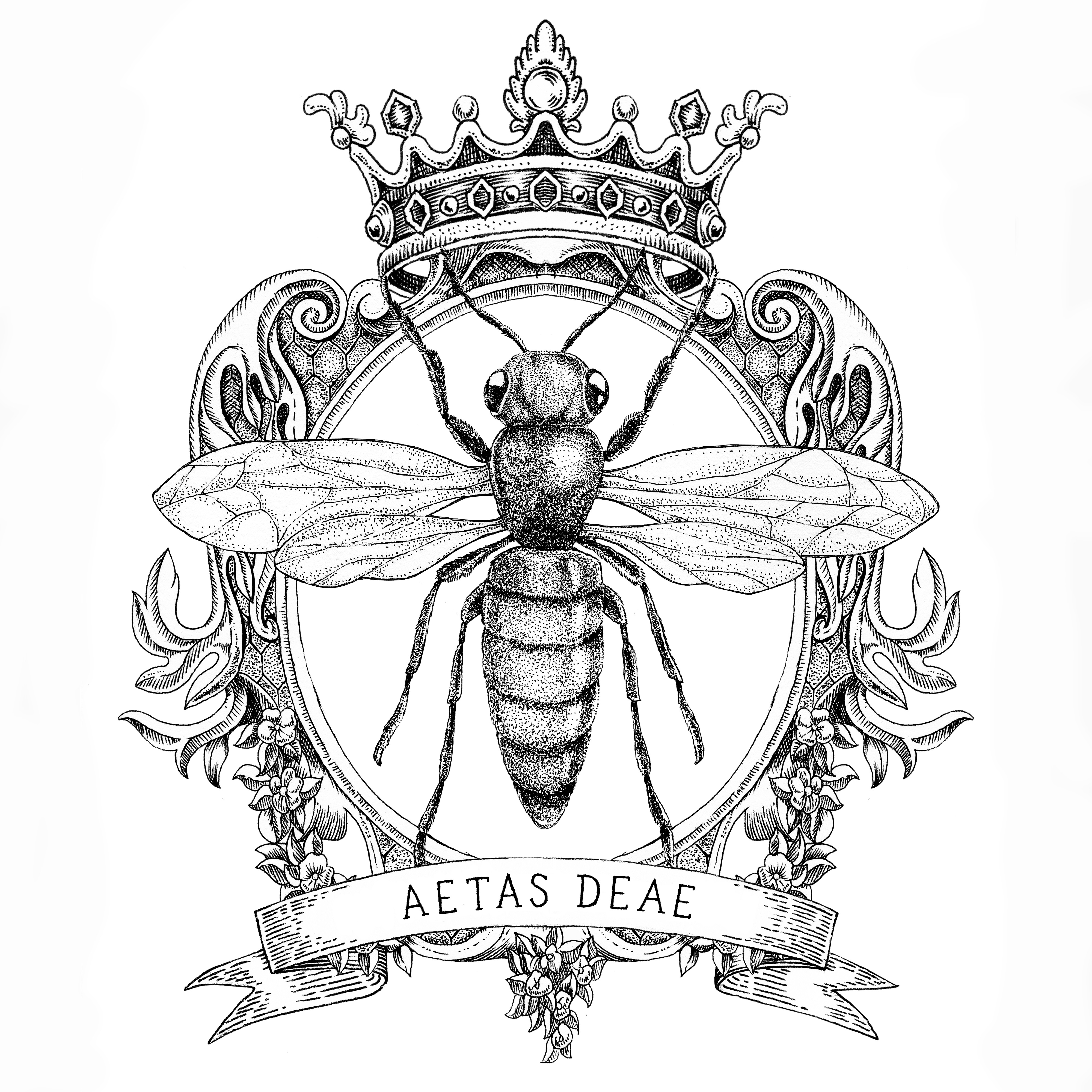

Aetas Deae is not only a philosophy or a personal practice.
It is a way of living together.
Community, in this context, does not mean a mailing list, a social network, or a series of events.
It names a social form: a female-led mode of collective life organised around care, coherence, embodiment, and non-domination.
This post sets out what community means within Aetas Deae, how it differs from patriarchal or pseudo-egalitarian models, and what allows it to remain alive without collapsing back into hierarchy or chaos.
I. Community Is Not an Add-On — It Is the Form
Patriarchal cultures treat community as secondary.
The primary units are:
- the individual
- the nuclear family
- the market
- the state
Community is something people “participate in” once private needs are met.
Aetas Deae reverses this logic.
Community is not optional.
It is the structure through which life becomes sustainable.
Care, child-rearing, creativity, erotic vitality, ageing, healing, and belonging cannot be carried indefinitely by isolated individuals or couples.
They require collective form.
Female-led living begins by recognising that interdependence is not weakness — it is reality.
II. Female Leadership as Structural Orientation
Aetas Deae communities are female-led.
This does not mean:
- constant consensus
- informal power
- charismatic dominance
- emotional labour disguised as leadership
It means structural orientation.
Women hold:
- final decision-making authority
- ethical reference points
- responsibility for coherence rather than control
This leadership is corrective, not punitive.
It exists to prevent the quiet re-emergence of patriarchal dynamics — entitlement, extraction, domination, or abandonment masquerading as freedom.
Female leadership in community is not about ruling others.
It is about holding the centre.
III. Equality of Dignity, Difference of Function
Aetas Deae communities do not operate on symmetry of power.
All participants hold equal dignity.
Roles, responsibilities, and access are differentiated by:
- contribution
- capacity
- accountability
- alignment
This prevents two familiar failures:
- patriarchal hierarchy on the one hand
- leaderless collapse on the other
Men and masculine participants are not excluded from community life, care, creativity, or belonging.
They are, however, structurally decentered from governance, in order to prevent the reproduction of domination.
This is not a moral judgement.
It is a design choice.
IV. Care as Infrastructure, Not Sentiment
In patriarchal societies, care is invisible, feminised, and extracted.
In Aetas Deae, care is treated as infrastructure.
This includes:
- emotional labour
- child-rearing
- elder care
- nourishment
- rest
- relational maintenance
- erotic and creative vitality
Care is not assumed.
It is organised, protected, and shared.
Communities that fail to do this collapse under resentment, burnout, or quiet exploitation.
Aetas Deae names this openly and designs against it.
V. Boundaries, Structure, and the Prevention of Domination
Female-led community does not mean permissiveness.
Clear structure is essential.
Aetas Deae communities maintain:
- boundaries around participation
- expectations of self-inquiry and accountability
- consequences for repeated harm or misalignment
- protection against manipulation, dependency, or entitlement
Structure is not the enemy of freedom.
Structure is what allows non-domination to persist over time.
Without it, patriarchal patterns return by default.
VI. Belonging Without Shame
Patriarchy governs through shame.
It enforces belonging by punishing deviation, vulnerability, erotic truth, and difference.
Aetas Deae communities are built around:
- de-shaming
- embodied honesty
- relational truth
- the right to be seen without self-erasure
This does not mean the absence of standards.
It means the refusal to weaponise shame as a tool of control.
Belonging arises through resonance and responsibility, not conformity.
VII. Children, Continuity, and the Long View
Aetas Deae takes the long view of community life.
This includes:
- collective responsibility for children
- intergenerational presence
- models of care that do not isolate mothers
- social forms that do not burn women out in the name of independence
Community is how continuity is carried.
Female-led living recognises that cultures survive not through dominance or expansion, but through care, rhythm, and transmission.
VIII. Why Events and Retreats Matter
Events, gatherings, and retreats are not the community itself.
They are threshold spaces.
They allow:
- interruption of patriarchal conditioning
- embodied re-patterning
- deepening of trust and coherence
- initiation into shared values and ways of living
This is why Aetas Deae hosts retreats and gatherings:
not as spectacles, but as sites of community formation and renewal.
Community stabilises daily life.
Retreat deepens it.
IX. Living Together Differently
Female-led living is not utopian.
It is practical.
It asks different questions:
- Who holds authority, and why?
- How is care organised?
- What prevents domination?
- How is belonging maintained without coercion?
- How are children, elders, and the vulnerable held?
Aetas Deae offers one answer:
community organised around the Feminine as source, care as infrastructure, and structure as protection against domination.
This is not nostalgia.
It is not ideology.
It is a living experiment in how people might live together once patriarchy is no longer treated as inevitable.
A Living Community
Aetas Deae is not finished.
It is shaped by the women and others who gather, contribute, lead, question, and remain.
Community here is not something you join once and possess.
It is something you participate in, uphold, and help make real.
This is what it means to live the Age of Women together.
Written by Mx Valentina